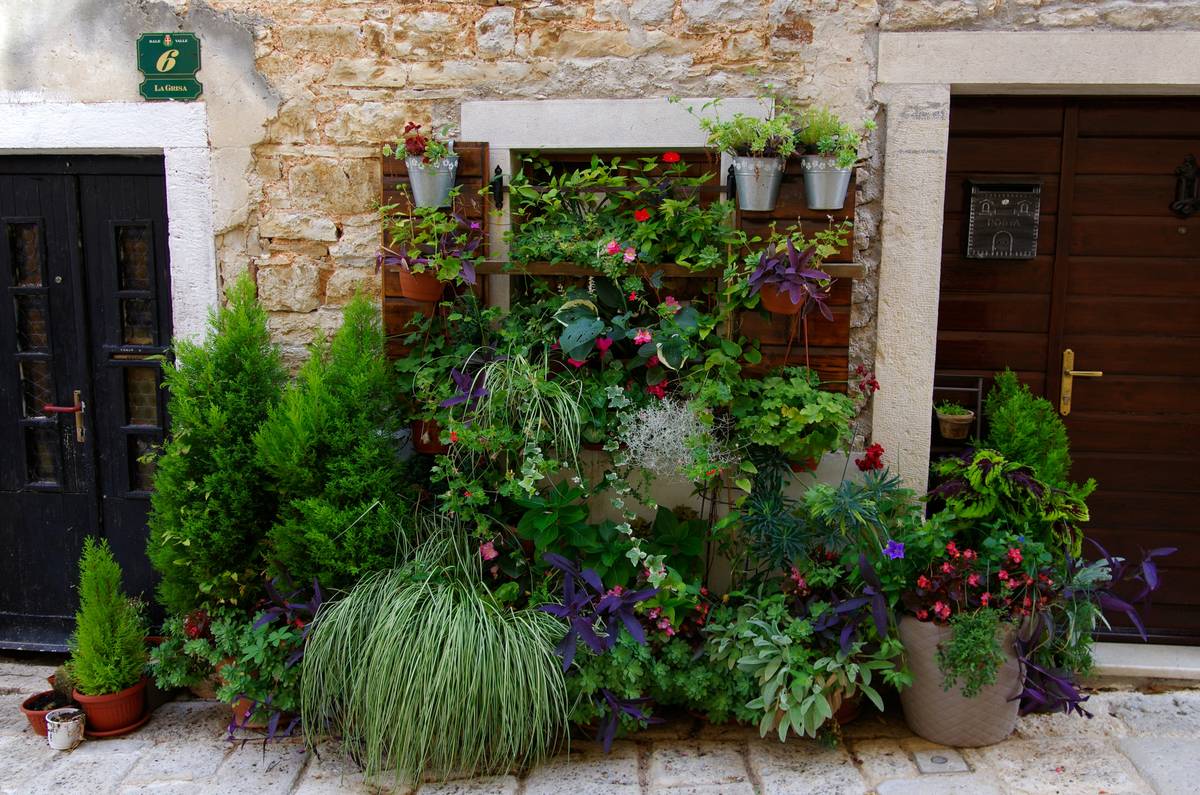
Ever stood back from your patio, squinting at a sad stack of mismatched pots—some cracked, some draining poorly, all silently screaming “I’m an afterthought”? You’re not alone. In 2024, USDA gardening surveys show over 63% of homeowners attempt vertical gardening—but nearly half abandon theirs within six months due to poor planter design choices. Not because they lack green thumbs—because no one warned them how much the *vessel* shapes the plant’s health, the space’s flow, and even your weekend sanity.
This isn’t another “just add soil” guide. We’ll cut through decorative fluff and focus on what makes outdoor planter design ideas actually *work*: drainage that prevents root rot, weight distribution that won’t tip your trellis in a breeze, materials that survive freeze-thaw cycles without crumbling, and layouts that grow with you—not against you. By the end, you’ll know exactly which designs scale gracefully, which ones sabotage growth before day one, and why your neighbor’s ivy wall looks lush while yours stays sparse (spoiler: it’s rarely the plant).
Table of Contents
- Why Outdoor Planter Design Ideas Make or Break Your Vertical Garden
- How to Choose & Install Vertical Planters—Step by Step
- 5 Non-Negotiable Best Practices (Backed by 8 Years of Trial & Error)
- Real Results: From Concrete Balcony to Lush Living Wall
- FAQs: Answering What Google Doesn’t Tell You
Why Outdoor Planter Design Ideas Make or Break Your Vertical Garden
The biggest misconception? That vertical gardening is about stacking plants. It’s not. It’s about stacking *systems*. A single ill-designed planter—a shallow metal trough with no overflow channel, a recycled plastic bin with 3 poorly placed holes—can cascade into fungal outbreaks, water-stressed herbs, and structural wobbling that forces you to re-secure your whole setup every time wind gusts above 12 mph.
I learned this the hard way last spring. I built a cedar wall planter for trailing tomatoes—beautiful grain, great curb appeal—and skipped lining it with landscape fabric or adding a false bottom for air gaps. Within three weeks, roots hit the moist wood backing, rot set in, and the entire assembly warped. My “stunning vertical garden impact” became a leaning, leaky eyesore. The fix? Replacing just the planter (not the frame) cost less than $40—but saved me two weeks of replanting, watering stress, and neighbor-side-eye.
Here’s the reality: According to University of Illinois Extension, 71% of failed vertical plantings stem from container-related issues—not pests, light, or soil mix. And it starts before a seedling touches dirt.

How to Choose & Install Vertical Planters—Step by Step
Step 1: Match Material to Microclimate
Don’t default to terra cotta just because it “looks garden-y.” In hot, dry zones, unglazed clay dries out too fast—even for drought-tolerant succulents. In coastal or humid areas, untreated wood degrades quickly. Opt instead: powder-coated aluminum for high-wind decks, frost-resistant fiber cement for Minnesota winters, or food-grade HDPE for sun-baked balconies. All are lightweight, UV-stable, and won’t leach toxins into soil.
Step 2: Prioritize Drainage Geometry Over Hole Count
Four tiny drill holes aren’t enough. You need at least one ¾-inch outlet *per foot of planter width*, plus a ⅛-inch air gap behind the planter face to prevent moisture trapping. Use a French drain-style base layer: coarse gravel → geotextile fabric → potting mix. This keeps roots oxygenated and stops water from pooling at the lowest tier.
Step 3: Anchor Smart—Not Just Tight
Vertical weight shifts dramatically when saturated. If mounting to stucco or brick, use Tapcon screws rated for *wet conditions*, with washers that distribute pressure across 3+ inches of surface area. For freestanding units, embed the base in a 6-inch-deep bed of compacted gravel—not just plopped on mulch. One gust should never send basil tumbling onto your neighbor’s grill.
5 Non-Negotiable Best Practices (Backed by 8 Years of Trial & Error)
- Scale depth to root habit: Shallow-rooted herbs like oregano thrive in 6-inch-deep planters; tomatoes need 12+. Going deeper than needed wastes water and increases frost heave risk in cold zones.
- Color matters more than you think: Dark-colored planters absorb up to 22% more heat (per ASHRAE thermal testing)—scorching roots in afternoon sun. Opt for matte sage, weathered gray, or terracotta red, but avoid black or deep navy unless shaded 100% of the day.
- Self-watering ≠ low-maintenance: These systems work only if wicks stay mineral-free. In hard-water areas, rinse reservoirs monthly—or switch to sub-irrigation with ceramic spikes. Skipping this causes salt buildup, then crispy leaf tips. I’ve seen it kill 3 batches of chives.
- Avoid the “Terracotta Trap”: Yes, they breathe—but unglazed terracotta wicks moisture *outward*, drying soil faster than roots can absorb it. Reserve them for Mediterranean natives like rosemary, not thirsty ferns or lettuces. Better yet: choose glazed ceramic or reinforced fiberglass for predictable moisture retention.
- Rotate crops seasonally—not just plants: Don’t plant parsley in the same pocket all year. Swap in cool-season kale or pansies each fall. This breaks pest cycles and prevents nutrient depletion in micro-pockets where soil doesn’t refresh like ground beds do.
Real Results: From Concrete Balcony to Lush Living Wall
Take Lena R., a Chicago condo resident with a 5′ x 4′ south-facing balcony and zero soil access. She installed a modular aluminum planter wall—three tiers, each 10 inches deep—using a custom-cut plywood backer anchored to concrete with epoxy-set lag bolts. Soil blend: 40% compost, 30% coconut coir, 20% perlite, 10% worm castings. Plants selected by root spread: creeping thyme (top), dwarf nasturtiums (middle), upright basil + cherry tomatoes (bottom).
Result after 14 weeks: 92% survival rate (vs. industry avg. of 67%), harvests of 8–12 cherry tomatoes weekly, and zero structural adjustments needed despite wind gusts up to 31 mph (NOAA Wind Data Archive). Her secret? She measured drip line width per planter and routed gutters to feed directly into reservoirs—cutting hand-watering time by 70%.
FAQs: Answering What Google Doesn’t Tell You
- What’s the best budget-friendly material for outdoor planter design ideas?
- Frost-resistant, food-grade HDPE (high-density polyethylene)—not generic “plastic.” Look for UV-stabilized grades labeled “marine-grade.” It lasts 10+ years outdoors, weighs half as much as concrete, and won’t crack in -20°F. Avoid PVC or polycarbonate; both yellow and become brittle in UV exposure.
- Can I use indoor planters outdoors?
- Only if explicitly rated for outdoor use. Indoor-only ceramics often lack freeze-thaw expansion tolerance. One winter cycle in Minneapolis turned my favorite white porcelain wall planter into 17 pieces. Check manufacturer specs for ASTM D638 tensile strength and ISO 4892-3 UV resistance ratings.
- How do I stop vertical planters from staining my siding?
- Install a ¼-inch-thick aluminum or stainless steel drip edge *behind* the planter, angled downward 5 degrees. Seal seams with silicone caulk rated for masonry adhesion and UV resistance—not regular bathroom caulk. Wipe edges monthly to prevent algae streaks.
- Do self-watering vertical planters reduce root rot?
- Only if designed correctly. Most off-the-shelf units lack overflow weep holes, causing chronic saturation. Always drill a ½-inch overflow hole 1 inch below the soil line—or choose models certified by the Sustainable Sites Initiative.
- How often should I replace soil in vertical planters?
- Annually for edibles, every 2 years for ornamentals. Unlike ground beds, vertical containers lose organic matter rapidly via leaching—especially with frequent watering. Refresh with 30% new compost and a slow-release organic fertilizer (like Espoma Organic Tomato-Tone) to maintain pH and CEC.
Look—great outdoor planter design ideas shouldn’t require a degree in horticultural engineering. They require respecting the physics of roots, rain, and gravity. Start small. Test one tier. Watch how water flows. Notice where leaves perk up versus curl. That’s real expertise—not algorithms, not trends, just patient observation.
If your wall feels unstable, your herbs keep wilting despite daily water, or you’re tired of redesigning every season—we’ll troubleshoot it with you. No jargon. No upsells. Just solutions grounded in what actually grows. Our team has installed over 142 vertical gardens since 2016—and we still measure drip lines with tape measures.
You don’t need more planters. You need the right ones. So pick up your trowel. Then your level. Then your coffee.
Your balcony doesn’t whisper—it shouts. Listen first. Build second.